Digital Dark Ages: The Lost Data of the Early Internet
Explore the disappearance of early internet data and its impact on cultural memory and digital preservation in the era known as the Digital Dark Ages.


In an age where “hustle” has become a sacred mantra, where every waking moment is seemingly an opportunity to climb some invisible ladder, the idea of doing nothing can feel downright revolutionary—or at least deeply suspicious. Yet, paradoxically, it’s precisely in these pockets of intentional idleness that some of the sharpest insights, the most creative breakthroughs, and the kind of mental clarity that gets you *actually* moving forward, begin to emerge. Welcome to the paradox of productivity: sometimes, doing nothing is the most productive move you can make.
We live in a world that applauds busyness like it’s a sport. Social media feeds overflow with productivity hacks, morning routines, and side hustle testimonials, all framed to convince us that if we’re not constantly grinding, we’re somehow failing. Spoiler alert: this isn’t a sustainable strategy.
Hustle culture tends to equate every minute spent idle with wasted potential, but it ignores a crucial fact: the human brain doesn’t function like a machine. We’re not CPUs that can run at 100% usage 24/7. Instead, our minds need rest, downtime, and yes, sometimes a good old-fashioned daydream session to recalibrate.
Without these pauses, productivity morphs into burnout. Creativity stagnates. Motivation slips. You end up running on empty, chasing a carrot that keeps moving faster than you can sprint. The irony? Doing more doesn’t always mean accomplishing more.
It turns out that doing nothing isn’t just a waste of time—it’s a biological necessity for innovation and mental health. Research in neuroscience and psychology reveals that when you’re not focused on a task, your brain enters what’s called the default mode network (DMN).
This network activates during restful wakefulness, such as daydreaming, letting your mind wander, or just staring out the window thinking about absolutely nothing productive. The DMN is linked to self-reflection, memory consolidation, and the kind of creative problem-solving that can’t be forced under pressure.
Consider this: some of the greatest ideas in history were born not in boardrooms or brainstorming sessions, but in moments of idleness. Einstein famously credited his theory of relativity to thought experiments conducted while relaxing, and countless artists, writers, and scientists have testified to the power of letting their minds drift.
When the brain isn’t busy processing immediate tasks, it can connect disparate dots, form novel associations, and reach insights that were previously hidden. The next time you’re stuck on a problem, try stepping away from it entirely. Go for a walk, meditate, or stare at the ceiling. You might find that the solution sneaks up on you when you least expect it.
Before you abandon your to-do list and start binge-watching cat videos, let’s be clear: there’s a world of difference between intentional idleness and procrastination.
Embracing idleness means scheduling it, treating it as a productive act in its own right, and not feeling guilty about it. Procrastination, on the other hand, is typically unplanned and leaves you scrambling later.
In the context of our hyperconnected lives, the idea of “doing nothing” is often conflated with “unplugging from technology.” While digital detoxes can be beneficial, the real challenge lies in cultivating digital awareness—a mindful relationship with the tools that often distract us from idleness.
Scrolling endlessly through feeds or multitasking between notifications might feel like productivity, but it’s mostly a clever masquerade. Intentional idleness can mean turning off your phone, yes, but it can also mean learning to use technology in ways that support reflection and rest rather than constant stimulation.
Here’s the rub: society conditions us to feel guilty for doing nothing. So how do you start reclaiming idleness as a productive practice?
Remember, you’re not being lazy—you’re investing in your brain’s most fertile ground for growth and innovation.
Think of productivity not as a linear sprint but as a balanced ecosystem. There’s work, rest, play, and yes, moments of doing nothing that all interact to create sustainable success.
When you embrace this ecosystem, you start to see how hustle culture’s one-dimensional push for constant output is not only shortsighted but counterproductive. True productivity is about working smarter, not harder—and sometimes that means stepping off the treadmill and letting your mind breathe.
“Almost everything will work again if you unplug it for a few minutes… including you.” — Anne Lamott
Explore the disappearance of early internet data and its impact on cultural memory and digital preservation in the era known as the Digital Dark Ages.
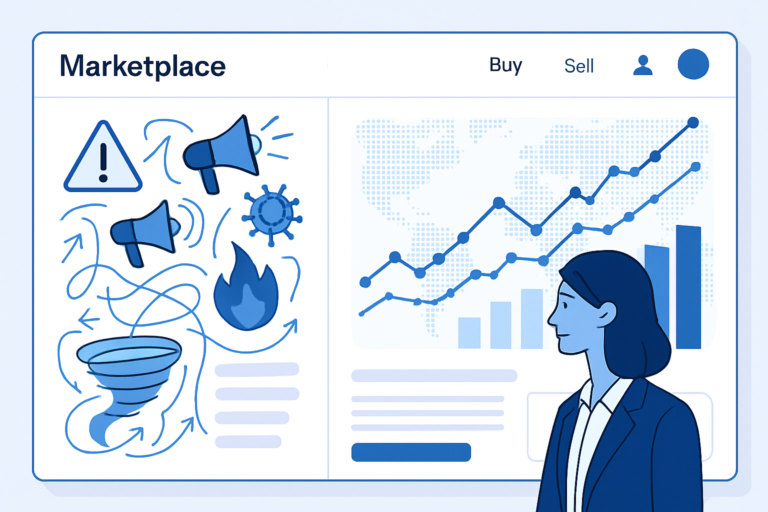
Kalshi revolutionizes finance by letting everyday people trade on the outcomes of global events, transforming uncertainty into a new asset class and democratizing predictions.

Explore the controversial Phantom Time Hypothesis that claims nearly 300 years of history, including the Middle Ages, were fabricated, challenging our understanding of historical timelines.