Digital Dark Ages: The Lost Data of the Early Internet
Explore the disappearance of early internet data and its impact on cultural memory and digital preservation in the era known as the Digital Dark Ages.


Picture this: you’re a neurodivergent user—maybe ADHD, autism, dyslexia, or something else that makes your brain dance to its own rhythm. You fire up your favorite app or website, expecting a smooth ride, but instead, you’re faced with a labyrinth of pop-ups, auto-play videos, blinking notifications, and labyrinthine menus that feel designed by someone who’s never met you. Welcome to the world of tech design’s best-kept secret: the unseen bias against neurodivergent experiences.
Technology is often pitched as “for everyone,” a democratizing force making life easier, faster, and more connected. Yet, when you peel back the layers of UX/UI and workflow decisions, you find a more exclusive club—one that caters primarily to neurotypical brains. Designers and developers, often blissfully unaware of the diversity in cognitive wiring, create interfaces that assume uniform attention spans, processing styles, and sensory preferences.
Consider the sheer volume of stimuli on many platforms: auto-playing videos, infinite scrolls, push notifications pinging every five seconds. For a neurodivergent person, this isn’t just “loud design” — it’s an assault. It’s like walking into a room where everyone’s talking at once, lights are flickering, and your brain is trying to filter out the chaos while still being expected to deliver coherent responses.
It’s easy to dismiss these issues as minor inconveniences. But for neurodivergent users, they translate into real barriers—barriers that affect education, employment, social connection, and access to vital services. Imagine a job application portal that auto-logs you out after 10 minutes because “the average user” doesn’t need more time. Or a learning platform that bombards you with distracting animations while you’re trying to focus. These aren’t hypothetical problems; they’re everyday frustrations that chip away at digital inclusion.
“Design is not neutral. It embodies the values, assumptions, and biases of its creators.” — Critical Design Theory, probably
When tech companies tout accessibility features, it’s often a checkbox exercise—screen reader support, color contrast adjustments, maybe some font size toggles. But accessibility for neurodivergence is far more nuanced. It demands an understanding of cognitive diversity and the courage to rethink foundational design paradigms.
Thankfully, the future doesn’t have to be a dystopia where neurodivergent users fend for themselves in a hostile digital jungle. There are concrete, practical steps designers and developers can take to make tech more inclusive, without sacrificing style or innovation.
The best interfaces let users tailor their experience. Think adjustable animation speeds, toggleable notifications, simplified modes, and the option to switch between linear and non-linear navigation. In other words: give people control over the sensory and cognitive environment.
Frequent, unexplained interface changes are kryptonite for neurodivergent users. Clear version notes, user education, and stable design patterns help users build mental maps and reduce anxiety.
Use muted color schemes, avoid flashing elements, and provide “quiet modes” that strip down sensory input without stripping out functionality. Sometimes less really is more.
Engage directly with neurodivergent users during the design process. Their lived experience is a goldmine of insights that no amount of traditional usability testing can replicate.
Instead of obsessing over click-through rates or session lengths, measure success by how comfortably and effectively users accomplish their goals—whatever their cognitive style.
Designing for neurodiversity isn’t just a niche concern; it’s a mirror reflecting broader societal values. When tech includes diverse brains, it fosters empathy, creativity, and fairness. Moreover, the innovations born from inclusive design often benefit everyone—think captions initially created for the hearing impaired now used widely for convenience, or adjustable text sizes that help aging eyes.
In short, ignoring neurodivergence in tech design is a missed opportunity to create products that truly serve humanity’s kaleidoscopic brilliance. It’s also a failure to live up to tech’s promise of connection and empowerment.
Explore the disappearance of early internet data and its impact on cultural memory and digital preservation in the era known as the Digital Dark Ages.
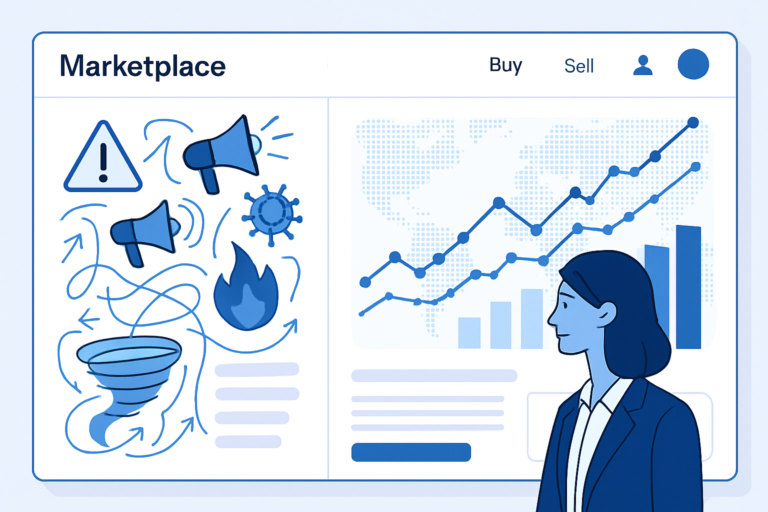
Kalshi revolutionizes finance by letting everyday people trade on the outcomes of global events, transforming uncertainty into a new asset class and democratizing predictions.

Explore the controversial Phantom Time Hypothesis that claims nearly 300 years of history, including the Middle Ages, were fabricated, challenging our understanding of historical timelines.