
Digital Dark Ages: The Lost Data of the Early Internet
Explore the disappearance of early internet data and its impact on cultural memory and digital preservation in the era known as the Digital Dark Ages.


Gamification doesn’t need to be glittery badges and infantilizing progress bars yelling “Good job!” at people who just remembered to drink water. It can be a subtle, humane design language that nudges attention, rewards mastery, and makes the banal flow better. The trick — as with most things — is not to overfeed the user with dopamine pellets or build systems that reward the wrong behavior. Tasteful gamification elevates experience without making adults feel like they’re back in kindergarten or trapped in a reward economy designed by an evil carnival barker.
Tasteful gamification is about shaping friction, clarifying progress, and honoring intrinsic motivation. It borrows mechanics from games — goals, feedback, pacing, and social learning — but it avoids pretending life and work are games when they’re not. You want engagement and flow, not manipulation and burnout.
Instead of a flashing leaderboard, the app showed an unobtrusive weekly summary: tasks completed, deepest focus streak, and a single suggestion for improvement. Users reported increased flow because they could see real progress without being baited into longer sessions chasing a meaningless top spot. The moral: summarize competence, don’t sell spectacle.
Rather than badges for every click, the platform introduced micro-assessments and skill tiers that unlocked only after demonstrated application. Completion rates rose but, crucially, downstream retention of skills also increased. When rewards follow demonstrable learning, motivation becomes self-sustaining.
One wellness app watched a growth spike after adding streaks and public nudges. Two months later, churn rose: people were turning the app off for weeks to avoid losing streaks and felt guilty when they returned. The initial retention was solved by anxiety, not adoption. The fix: make streaks private, add reset forgiveness, and emphasize the benefit of returning rather than punishing absence.
“If your product makes someone feel bad for missing a day, you’re not increasing value—you’re increasing guilt.”
When user completes [small task], show: “Nice — you completed [X]. That’s [Y]% toward [meaningful outcome]. Keep going: try [one small next step].”
Replace [small task] with the user’s actual action, [X] with task label, [Y] with the computed progress percentage, and [meaningful outcome] with a clear goal (e.g., “weekly focus target”).
Stage 1: “Learner — complete 5 guided steps.”
Stage 2: “Practitioner — apply skill on two real tasks.”
Stage 3: “Independent — complete 3 advanced challenges.”
Use this scaffolding copy in the UI with a clear indicator of what counts as evidence for each stage and an easy way to skip or reset the ladder.
Hypothesis: Private, competence-based feedback increases sustained engagement more than public leaderboards.
Variant A: Competence summary + private milestones.
Variant B: Public leaderboard + points.
Primary metric: 30-day retention with task completion. Secondary: self-reported stress (optional micro-survey). Duration: 4 weeks. Panic button: disable Variant B if stress metric rises or churn spikes 10% above baseline.
Life is short and apps are many. If you’re going to gamify anything, make it the part that helps people get better at what they already care about — not the part that makes them feel like they’re playing someone else’s exploitative game. Do that, and you’ll generate engagement that’s both ethical and pleasantly sticky. Which is to say: useful, not gross.
Explore the disappearance of early internet data and its impact on cultural memory and digital preservation in the era known as the Digital Dark Ages.
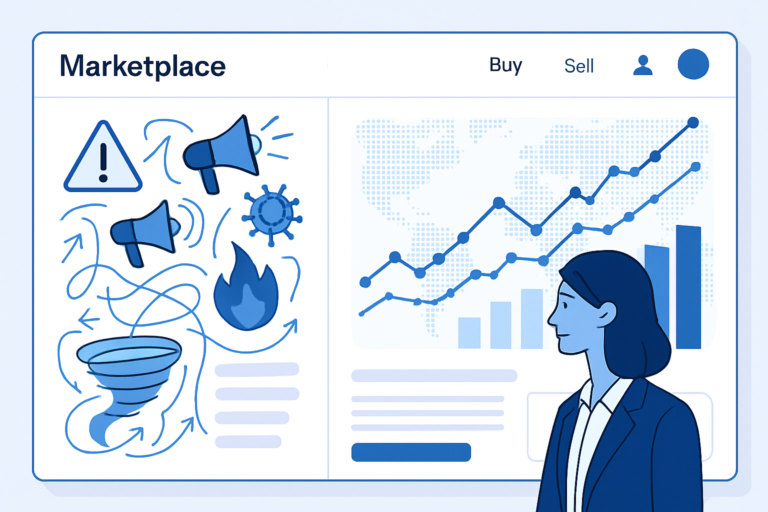
Kalshi revolutionizes finance by letting everyday people trade on the outcomes of global events, transforming uncertainty into a new asset class and democratizing predictions.

Explore the controversial Phantom Time Hypothesis that claims nearly 300 years of history, including the Middle Ages, were fabricated, challenging our understanding of historical timelines.